Earlier this week, I spent five hours at the WERK1 coworking space in Munich, moving three projects forward at once: the brain dump that would become this blog post, a contribution to an open source project, and a redesign of my blog’s analytics. My AI agents did the heavy lifting. Whenever one of t…
„Nah ist / Und schwer zu fassen der Gott. / Wo aber Gefahr ist, wächst / Das Rettende auch.” — Friedrich Hölderlin, Patmos (1803)
(Near is, / and difficult to grasp, the god. / But where danger is, grows / the saving power also.)
A few weeks ago, I wrote a post titled Thinking with Claude: why Cyborg writing works better than Centaur writing. In the LinkedIn comments, a reader named Christopher pushed back: Leaning on AI to help me write, he argued, was training my brain to “surrender executive function to external sources.” Examples: freed prisoners overwhelmed by everyday choices, ex-military struggling with civilian life, people leaving long-term institutional care. The source doesn’t matter, he wrote. The offloading pattern is the same.
While my initial answer was along the lines of “using your executive function is a choice”, I think it’s not that simple, after all, and I owe Christopher a real answer. In fact, his comment pushed me into a weeks-long thinking journey, during which I looked for research, came across interesting related articles, and reflected a lot on my own AI use. I also jammed with Claude, and yes: I used the very tool Christopher warned me about to think harder about his warning. We’ll get to that contradiction later.
After 27 years in tech—working at Sun Microsystems, Oracle, and AWS, then coaching dozens of colleagues through promotions from both sides—I’ve learned something that most people get backwards: Your career belongs to you. Not your company. Not your manager. Not the promotion committee. Everything el…
A 25-year career without goals—and why that worked better than the alternative This guitar is more than 15 years old. It’s my second one—the first was bought and sold in the ’80s. I tried lessons. Self-teaching. Regular practice. Still couldn’t play a recognizable song. Now it collects dust, remindi…
A few days ago, I had a conversation with a former colleague who interviewed for a new job because she couldn’t stand her current one. Getting a new offer made her feel relieved and optimistic again: She had escaped.
Many others may not be so lucky this year.
Tech layoffs are accelerating. The economy—if we’re honest and look past the AI boom—looks shaky. Gold prices are spiking, which historically signals uncertainty ahead. And if you’re reading this feeling worried about your job, your future, or the general state of things, I know well how you feel.
Over 27 years and five major crises, I’ve learned one thing: the difference between thriving and drowning isn’t luck—it’s knowing what you can change and what you can’t.
Working for my then employer’s Munich office in 2011, I felt it—that hollow sensation when your career becomes a treadmill. The acquisition of the company I originally joined had stripped away the technological beauty and purpose I’d thrived on for more than a decade. The rigid culture, the pure commercial focus, the loss of autonomy.
I wasn’t incompetent, broke, or irrelevant… I was just bored.
And boredom, I realized, was the first horseman of a dying career.
Here’s a secret: after almost 13 years at Amazon Web Services, I still felt like most people around me were smarter and more capable than me. And now, as a blogger looking at other writers? That feeling hasn’t gone away. If this sounds familiar, you’re experiencing imposter syndrome—and you’re in ex…
Back in the late 80s, I was a computer-enthusiastic teenager helping my mother, who was leading the German consulate in Rome at the time. I still remember teaching her secretaries how to use PCs for word processing instead of their trusty typewriters. I guess that was my very first gig as tech suppo…
I remember a colleague, let’s call her Sarah, who was checking her phone every minute during our 30-minute meeting, apologizing for being distracted, mentioning her endless to-do list. She was drowning, and she didn’t even know it. Sounds familiar? Here’s what I learned: overwhelm is not a time mana…
I’m a big fan of Cal Newport and his books. Currently, I’m reading his latest one: “A World Without Email”
Every email comes at a small cognitive cost to the sender, and a small cognitive cost to the recipient. It has become easier than ever to “just send an email”, instead of diving deeper, solving the issue, or using a more appropriate, more efficient, or less stressful way of communication. Multiplied by the amount of companies, employees, emails per employee, the wasted time and cognitive cost of (over)using email for everything has become enormous. And instant messaging only amplifies the problem again.
I’ve become very good at filtering and processing email over the last years. But this is just trying to solve the receiving end of the problem. Now I’m curious about learning ways to fix the problem at the source. Not just for me, but for my colleagues, too.
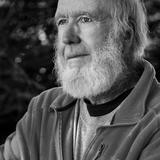
Kevin Kelly, co-founder and executive editor of Wired magazine, recently turned 70. Happy Birthday!
His birthday gift to us all is “103 bits of unsolicited advice”. Each one brilliant and full of wisdom. And all are free.
The paradox of “free” is that people tend to not value the “free” things, exactly because it’s free: If it didn’t cost much, it’s probably not worth much.
If somebody took these and added an anecdote or two to each one, plus some background, they could turn this into a bestseller. Probably a series of bestsellers, too.
But here they are, hard-earned lessons for all of us. Free for those who care, and who recognize the value of great advice.
In my current job, I occasionally mentor people and one of the questions I often get is: “How do you find good opportunities?” By which people mean cool technologies to explore, great projects to be part of, opportunities to talk at conferences, great companies to join, interesting people to meet, a…
A guy I know once said: “If you follow the herd, you’ll end up as lunch.” (Actually, he said “Schnitzel”, since he’s German, but you get the idea).
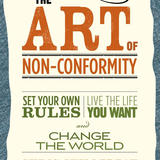
Well, here’s a guide, a manual if you wish, for avoiding the fate of leading a dull, boring and unremarkable life. This is not just a self-help or success guide type of book, it’s much more. It’s a manifesto for personal freedom that can apply to all of us, if we choose to follow it.
In some ways, it’s like the red pill/blue pill thing from The Matrix: Do you want to stay in the normal world, do normal, boring things like getting a job, applying for a mortgage, going on vacation once or twice a year, and feeding the ducks in the park after you retire?
Or do you want to decide for yourself what to do with your life, create your own rules and live your life the way you want?
Yesterday, I cleaned up my home directory at work. I went from ca. 15 GB of data down to 1.1 GB. And I only stopped there, because I didn’t want to spend too much more time cleaning up. Here’s how to do it.
Now let’s look at that other dark spot in our IT lives: Our Desktop and file system. If you’re like me, you see this very often, too: Cluttered desktops with so many files and folders and downloads and icons and stuff, you can barely make out the underlying desktop background.
Spring’s around the corner and the Easter weekend is upon us, giving us some time to sit back, relax and do some spring cleaning!
This also applies to your data, in particular your Email folders and your home directories. In this two-part series, we’ll clean up our email INBOX to zero (yes: null, nada, zip) emails, simplify email folders, then clean up our home directory file structure. That’ll save us time, help us find peace of mind and make us more efficient so we can concentrate our energies on what really matters to us.