All I wanted was to press a button and hear SomaFM Groove Salad through my home stereo. 🎵
What I got instead was six weeks of diving into AV receiver telnet commands, Raspberry Pi power mysteries, and NFC webhook proxies. Sometimes I spent an entire week debugging my Home Assistant setup only to discover I’d been using the wrong IP address the whole time 🤦♂️.
But here’s the thing: the journey is the reward. Sure, I could have just lived with telling Alexa to turn on my AV receiver, connect to it over Bluetooth, then asking it to play what I want. But then I wouldn’t have learned how UPNP broadcasts get mangled by WiFi bridge modes, or that a 2.2W Raspberry Pi can teach you more about power supply stability than any electrical engineering textbook.
This is the story of how a simple goal—press button, get music—led me down some of the most beautifully complex rabbit holes I’ve explored in years. And why that complexity is exactly the point. 🐰
Whenever you run a professional server, a home server, a hosted virtual server or just a blog on a shared web space, you run a service that provides something useful to your users, readers or whatever consumers your service caters to.
Too bad if things go wrong and you’re the last to notice.
Enter Monitis.com: This service allows you to easily track your servers, websites, blogs or anything else that can be accessed through the internet, or that is able to run a simple agent. Monitoring from the cloud, if you will, at reasonable prices. And if all you need is some basic monitoring, then there’s a free version called mon.itor.us, too.
But the script is still not ready to be used on our home servers yet: It requires manual start and stop, not quite the service oriented automatism we’re used to in the Oracle Solaris world.
The next step is to wrap our DTrace script inside a Service Management Facility (SMF) service, then wrap everything into a shell script that will easily install or remove the service whenever we need it.
Yesterday though, I discovered that my D script didn’t work any more. I uploaded new songs to my home server, and expected the music daemon to re-scan the music directory, but nothing happened.
That teached me an important lesson about DTrace, and here’s what I learned:
One of the most typical uses for a home server is to serve music or videos to home entertainment equipment. In my case, I’m using the Firefly Media Server (no link, fireflymediaserver.org no longer exists) to serve music to my Roku Soundbridge and Mediatomb (no link, page no longer exists) for videos.
The Media Server Update Problem
Whenever I upload new music or videos to my OpenSolaris home server (typically by rsync-ing my laptop home directory), both Firefly and Mediatomb need to be restarted so they detect that new files are sitting in their directories, waiting to be served.
When I blogged about my OpenSolaris Home Server a while ago (no link, sun.com no longer exists), little did I know that this would become my most popular entry in my old blog!
In fact, R.G. (no link, page no longer exists) was so kind to call my setup “perilously close to being an AMD reference design (no link, opensolaris.org no longer exists)”. Thanks, R.G.! Read about his final setup here (no link, opensolaris.org no longer exists). And BTW, if you’re into e-guitars, check out his GEOFEX page, a great resource for guitar effects.
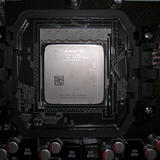
So let’s review our reference design and discuss some modifications to better suit your needs:
So let’s continue the theme and have a look at the following home server tips that helped me a lot during my own home server planning, building and installing:
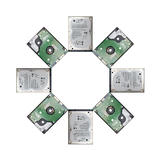
After moving my blog to its new home and getting my hands dirty with Drupal, it’s time to continue my series of blog articles about setting up a home server. Remember? We talked about home server requirements (no link, sun.com no longer exists), then I presented to you my small and energy-efficient, still ECC-protected and powerful AMD-based home server (no link, sun.com no longer exists). Now it’s time to explore some different ZFS disk pool RAID strategies.