A few years ago, I watched a thirty-minute video that changed the way I saw the world economy forever. Ray Dalio’s How the Economic Machine Works fascinated me so much because it explained the whole thing as a machine: credit, spending, income, productivity, cycles running at different speeds, parts…
Blog Posts
Every summer, a shoebox wins.
For about fifteen years, preparing my German tax return has cost me a weekend plus a few evenings, and quite a lot of swearing in between. Not the tax return itself: I have a Steuerberaterin for that, and she is excellent. What costs me the weekend is everything that has to happen before she can start. Remembering which receipts exist. Finding them. Naming them. Sorting them into the right folders. Building the spreadsheets that explain the numbers, and the notes that explain the spreadsheets.
This year I handed most of that to an AI. It still took a couple of days. But for the first time since I have been filing, it didn’t suck, and the result was better than anything I had produced on my own.
I regularly use the Perplexity API, whether from the command line or by letting Claude use it through an MCP, as a second search engine for its research. That’s why I paid attention when, about a week ago, an email from Perplexity landed in my inbox with the subject line “Your Sonar workload runs better on Agent API.” The pitch: their newer Agent API beats the classic Sonar models I’d been using, on both quality and cost.
Their own benchmarks put the cheapest Agent preset at roughly twice the accuracy of Sonar for about the same money, with the deeper presets reaching a level Sonar can’t touch (79.67% vs. 29.10% on BrowseComp for the high preset against Sonar Deep Research, at about 27% higher cost per query).
Marketing numbers, of course, but the direction made sense, and Perplexity is clearly steering everyone from Sonar to the Agent API (though they did also say Sonar isn’t going away).
I wanted to try it out and switch to the better, more efficient engine. It sounded easy, only it wasn’t.
Earlier this week, I spent five hours at the WERK1 coworking space in Munich, moving three projects forward at once: the brain dump that would become this blog post, a contribution to an open source project, and a redesign of my blog’s analytics. My AI agents did the heavy lifting. Whenever one of t…
„Nah ist / Und schwer zu fassen der Gott. / Wo aber Gefahr ist, wächst / Das Rettende auch.” — Friedrich Hölderlin, Patmos (1803)
(Near is, / and difficult to grasp, the god. / But where danger is, grows / the saving power also.)
A few weeks ago, I wrote a post titled Thinking with Claude: why Cyborg writing works better than Centaur writing. In the LinkedIn comments, a reader named Christopher pushed back: Leaning on AI to help me write, he argued, was training my brain to “surrender executive function to external sources.” Examples: freed prisoners overwhelmed by everyday choices, ex-military struggling with civilian life, people leaving long-term institutional care. The source doesn’t matter, he wrote. The offloading pattern is the same.
While my initial answer was along the lines of “using your executive function is a choice”, I think it’s not that simple, after all, and I owe Christopher a real answer. In fact, his comment pushed me into a weeks-long thinking journey, during which I looked for research, came across interesting related articles, and reflected a lot on my own AI use. I also jammed with Claude, and yes: I used the very tool Christopher warned me about to think harder about his warning. We’ll get to that contradiction later.
TL;DR: AI made the coding part of software fast, and that speed didn’t create chaos so much as expose where your organization was already slow: the hand-offs between teams. The fix isn’t a better tool, it’s better wiring. We rewired Dev and Ops once already and called it DevOps. The next wall, between business and engineering, is coming down the same way. Here’s how to see it, and one thing you can do tomorrow.
In February this year, I wrote about why I stopped trying to engineer prompts and started delegating intent instead. That post argued the skill of working with AI is managerial, not technical. I still think that’s right. But over the last couple months I’ve noticed something else: even with good del…
Most people use AI like a search engine with extra steps. Ask a question, get an answer, move on. I did too, until I accidentally stumbled into something completely different.
Over the week, I’ve turned Claude into my personal Chief of Staff. What’s a Chief of Staff, you might ask? Think of these people who follow executives around, whispering important things into their ear, and making sure nothing falls through the cracks.
If you’ve watched The Fifth Element (go watch it, if you haven’t, it’s a great movie!), you know the scene: the president’s aide leans in and whispers something absurdly specific like “You have 19 more meetings after this one.” That’s essentially what Claude does for me now. Except I’m not a president. And thankfully, I have less meetings. I’m a freelance consultant living near a forest in Bavaria.
This post is a bit of a recap: how it happened, what the system actually looks like, three lessons I learned along the way, and, at the end, an unedited interview where I asked Claude seven questions about what it’s like to be my Chief of Staff, with some interesting insights. Don’t miss it!

Here’s a video I just uploaded to YouTube, walking through 7+1 examples of how AI has woven itself into my daily life — from the mundane to the surprisingly useful. No demos, no hypotheticals, rather what an actual week with AI looks like for me.
TL;DR: The best “prompt engineering” technique isn’t engineering at all—it’s delegation. Transfer intent, not instructions. For quick tasks, tell the AI what success looks like and why (the Intent Prompt). For complex work, equip it with context, deliverables, and decision principles so it can navigate on its own (the Delegation Brief). You already have these skills. This post helps you apply them to AI.
According to media pundits, software stocks are “crashing”, and there’s a “SaaSpocalypse” going on. Recently, Noah Smith wrote about “The Fall of the Nerds,” painting a picture of software engineers as the new master weavers: skilled artisans about to be displaced by AI-powered looms. Meanwhile, I’m…
After 27 years in tech—working at Sun Microsystems, Oracle, and AWS, then coaching dozens of colleagues through promotions from both sides—I’ve learned something that most people get backwards: Your career belongs to you. Not your company. Not your manager. Not the promotion committee. Everything el…
A YouTube viewer reached out to me the other day after watching one of my videos. He’d just started at a big tech company and wanted to know: How do you navigate the fog? How do you figure out what to focus on? What are things to avoid?
I’ve felt that fog three times—at Sun Microsystems, Oracle, and AWS. And after 27 years and countless conversations with mentees, I think there are three phases that help cut through it.
A 25-year career without goals—and why that worked better than the alternative This guitar is more than 15 years old. It’s my second one—the first was bought and sold in the ’80s. I tried lessons. Self-teaching. Regular practice. Still couldn’t play a recognizable song. Now it collects dust, remindi…
Most people use AI the way our parents used the Internet in 1995. They’d dial up their modem, check the weather forecast on Yahoo, maybe look up a recipe, and call it a day. The idea that this same technology would eventually let them video call their grandchildren, run a business, or access humani…
Watching Werner Vogels deliver his 2025 re:Invent keynote last week, I experienced one of those rare moments where separate threads suddenly converge. There he was, Amazon’s CTO since 2005, laying out five principles for “Renaissance Developers”, and I realized: these weren’t just career advice for …
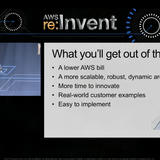
In 2014, I was preparing my AWS re:Invent presentation on “Running Lean Architectures.” I had my slides ready: agenda, bio, resources. Then I stopped. Why was I presenting this in the first place? The answer: to help people save money on AWS. Not to check boxes on a corporate template. Not to prove …
On constrained serendipity, learning by doing, and whether the system is the art. I’m chatting with Claude, kicking around ideas on building a tool that generates AI images, but without the prompting. I like to start these chats by brain-dumping ideas into it. In this case it’s about auto-generating…
February 1998. Munich. Sun Microsystems. My first customer presentation. I stood in front of a roomful of IT professionals with a marketing deck about our “newest, better workgroup server.” I hadn’t rehearsed beyond flipping through the slides a couple of times. I didn’t know who these people were o…
A package arrived a few months ago. Inside: a deck of cards with a red telephone on the box. “The Mentor Deck” by Seth Godin. I’m a beta tester, so I got one of the first 2,000 decks ever made. Each card has a QR code on the back that launches an AI conversation with a virtual mentor—Seth himself, o…