In July, my blogger friend Felix, who runs the Urgeschmack YouTube channel, sent me an email: after upgrading to the Claude Pro plan and setting up his first project with some reference notes in a shared folder, he asked if he could switch on memory per project only. He told me that a global memory …
During our summer vacation in Italy, I had a silly idea: what happens if you feed an image generator random data instead of a prompt? It’s a bit like provoking hallucinations instead of avoiding them. What do image generators produce that is truly inside them, if the prompt doesn’t carry any meaning…
A few years ago, I watched a thirty-minute video that changed the way I saw the world economy forever. Ray Dalio’s How the Economic Machine Works fascinated me so much because it explained the whole thing as a machine: credit, spending, income, productivity, cycles running at different speeds, parts…
For about fifteen years, preparing my German tax return has cost me a weekend plus a few evenings, and quite a lot of swearing in between. Not the tax return itself: I have a Steuerberaterin for that, and she is excellent. What costs me the weekend is everything that has to happen before she can start. Remembering which receipts exist. Finding them. Naming them. Sorting them into the right folders. Building the spreadsheets that explain the numbers, and the notes that explain the spreadsheets.
This year I handed most of that to an AI. It still took a couple of days. But for the first time since I have been filing, it didn’t suck, and the result was better than anything I had produced on my own.
I regularly use the Perplexity API, whether from the command line or by letting Claude use it through an MCP, as a second search engine for its research. That’s why I paid attention when, about a week ago, an email from Perplexity landed in my inbox with the subject line “Your Sonar workload runs better on Agent API.” The pitch: their newer Agent API beats the classic Sonar models I’d been using, on both quality and cost.
Marketing numbers, of course, but the direction made sense, and Perplexity is clearly steering everyone from Sonar to the Agent API (though they did also say Sonar isn’t going away).
I wanted to try it out and switch to the better, more efficient engine. It sounded easy, only it wasn’t.
Earlier this week, I spent five hours at the WERK1 coworking space in Munich, moving three projects forward at once: the brain dump that would become this blog post, a contribution to an open source project, and a redesign of my blog’s analytics. My AI agents did the heavy lifting. Whenever one of t…
„Nah ist / Und schwer zu fassen der Gott. / Wo aber Gefahr ist, wächst / Das Rettende auch.” — Friedrich Hölderlin, Patmos (1803)
(Near is, / and difficult to grasp, the god. / But where danger is, grows / the saving power also.)
A few weeks ago, I wrote a post titled Thinking with Claude: why Cyborg writing works better than Centaur writing. In the LinkedIn comments, a reader named Christopher pushed back: Leaning on AI to help me write, he argued, was training my brain to “surrender executive function to external sources.” Examples: freed prisoners overwhelmed by everyday choices, ex-military struggling with civilian life, people leaving long-term institutional care. The source doesn’t matter, he wrote. The offloading pattern is the same.
While my initial answer was along the lines of “using your executive function is a choice”, I think it’s not that simple, after all, and I owe Christopher a real answer. In fact, his comment pushed me into a weeks-long thinking journey, during which I looked for research, came across interesting related articles, and reflected a lot on my own AI use. I also jammed with Claude, and yes: I used the very tool Christopher warned me about to think harder about his warning. We’ll get to that contradiction later.
TL;DR: AI made the coding part of software fast, and that speed didn’t create chaos so much as expose where your organization was already slow: the hand-offs between teams. The fix isn’t a better tool, it’s better wiring. We rewired Dev and Ops once already and called it DevOps. The next wall, between business and engineering, is coming down the same way. Here’s how to see it, and one thing you can do tomorrow.
Last month I sat down with Cris Roata to record an episode of her podcast, Catching More Green Lights in Life. It went live today! Cris asked me what I tell people who are afraid of AI, and I gave the answer I usually give: treat it like an intern, train it patiently, expect the first attempts to be…
Detailed write-up by Michael Leibovich on how he used Claude Code (inside the Claude Desktop app) for implementing his own Chief of staff setup.
As someone running a very similar setup myself, I particularly liked his use-case descriptions and the insights coming out of “externalizing your thinking”. I can totally relate to that!
Also, I agree that installing Obsidian and giving Claude access to it through its REST API plugin and MCP are great for giving it a structured, extra memory layer beyond its own memory mechanism. Claude can write Obsidian-style Markdown documents directly to the file system which is faster than going through the MCP/API, but the real value is the ability to search for existing documents through MCP that allows Claude to discover notes, make cross-correlations and more.
I would add a few things from my own perspective here:
In February this year, I wrote about why I stopped trying to engineer prompts and started delegating intent instead. That post argued the skill of working with AI is managerial, not technical. I still think that’s right. But over the last couple months I’ve noticed something else: even with good del…
Most people use AI like a search engine with extra steps. Ask a question, get an answer, move on. I did too, until I accidentally stumbled into something completely different.
Over the week, I’ve turned Claude into my personal Chief of Staff. What’s a Chief of Staff, you might ask? Think of these people who follow executives around, whispering important things into their ear, and making sure nothing falls through the cracks.
If you’ve watched The Fifth Element (go watch it, if you haven’t, it’s a great movie!), you know the scene: the president’s aide leans in and whispers something absurdly specific like “You have 19 more meetings after this one.” That’s essentially what Claude does for me now. Except I’m not a president. And thankfully, I have less meetings. I’m a freelance consultant living near a forest in Bavaria.
This post is a bit of a recap: how it happened, what the system actually looks like, three lessons I learned along the way, and, at the end, an unedited interview where I asked Claude seven questions about what it’s like to be my Chief of Staff, with some interesting insights. Don’t miss it!
Here’s a video I just uploaded to YouTube, walking through 7+1 examples of how AI has woven itself into my daily life — from the mundane to the surprisingly useful. No demos, no hypotheticals, rather what an actual week with AI looks like for me.
TL;DR: The best “prompt engineering” technique isn’t engineering at all—it’s delegation. Transfer intent, not instructions. For quick tasks, tell the AI what success looks like and why (the Intent Prompt). For complex work, equip it with context, deliverables, and decision principles so it can navigate on its own (the Delegation Brief). You already have these skills. This post helps you apply them to AI.
According to media pundits, software stocks are “crashing”, and there’s a “SaaSpocalypse” going on. Recently, Noah Smith wrote about “The Fall of the Nerds,” painting a picture of software engineers as the new master weavers: skilled artisans about to be displaced by AI-powered looms. Meanwhile, I’m…
I’ve been transcribing my YouTube videos locally for a few months now. It took some trial and error to get a setup that actually works reliably, so here’s what I learned. The problem I wanted good subtitles for my videos—for accessibility, but also so I could feed the transcripts to Claude for gener…
After 27 years in tech—working at Sun Microsystems, Oracle, and AWS, then coaching dozens of colleagues through promotions from both sides—I’ve learned something that most people get backwards: Your career belongs to you. Not your company. Not your manager. Not the promotion committee. Everything el…
A YouTube viewer reached out to me the other day after watching one of my videos. He’d just started at a big tech company and wanted to know: How do you navigate the fog? How do you figure out what to focus on? What are things to avoid?
I’ve felt that fog three times—at Sun Microsystems, Oracle, and AWS. And after 27 years and countless conversations with mentees, I think there are three phases that help cut through it.
A 25-year career without goals—and why that worked better than the alternative This guitar is more than 15 years old. It’s my second one—the first was bought and sold in the ’80s. I tried lessons. Self-teaching. Regular practice. Still couldn’t play a recognizable song. Now it collects dust, remindi…
Most people use AI the way our parents used the Internet in 1995. They’d dial up their modem, check the weather forecast on Yahoo, maybe look up a recipe, and call it a day. The idea that this same technology would eventually let them video call their grandchildren, run a business, or access humani…
Watching Werner Vogels deliver his 2025 re:Invent keynote last week, I experienced one of those rare moments where separate threads suddenly converge. There he was, Amazon’s CTO since 2005, laying out five principles for “Renaissance Developers”, and I realized: these weren’t just career advice for …
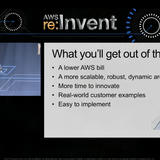
In 2014, I was preparing my AWS re:Invent presentation on “Running Lean Architectures.” I had my slides ready: agenda, bio, resources. Then I stopped. Why was I presenting this in the first place? The answer: to help people save money on AWS. Not to check boxes on a corporate template. Not to prove …
On constrained serendipity, learning by doing, and whether the system is the art. I’m chatting with Claude, kicking around ideas on building a tool that generates AI images, but without the prompting. I like to start these chats by brain-dumping ideas into it. In this case it’s about auto-generating…
February 1998. Munich. Sun Microsystems. My first customer presentation. I stood in front of a roomful of IT professionals with a marketing deck about our “newest, better workgroup server.” I hadn’t rehearsed beyond flipping through the slides a couple of times. I didn’t know who these people were o…
A package arrived a few months ago. Inside: a deck of cards with a red telephone on the box. “The Mentor Deck” by Seth Godin. I’m a beta tester, so I got one of the first 2,000 decks ever made. Each card has a QR code on the back that launches an AI conversation with a virtual mentor—Seth himself, o…
I wanted to create a YouTube channel and had my first video ready to go, but then… nothing. Weeks passed. I had ideas, I had equipment, and I’d watched enough tutorials to edit like a pro. But I couldn’t get myself to shoot video number two.
Classic procrastination.
So I did what I often do when I’m stuck: I talked to Claude. But this time, I didn’t just ask for advice. I invited two experts into the conversation to help me figure this out.
At 54 years old, I just started a YouTube channel.
This is an experiment. I recently read Anne-Laure Le Cunff’s book Tiny Experiments and decided to try something I haven’t done before: creating my own videos, not for a company or conference, but for anyone who might find them useful.
A few days ago, I had a conversation with a former colleague who interviewed for a new job because she couldn’t stand her current one. Getting a new offer made her feel relieved and optimistic again: She had escaped.
Many others may not be so lucky this year.
Tech layoffs are accelerating. The economy—if we’re honest and look past the AI boom—looks shaky. Gold prices are spiking, which historically signals uncertainty ahead. And if you’re reading this feeling worried about your job, your future, or the general state of things, I know well how you feel.
Over 27 years and five major crises, I’ve learned one thing: the difference between thriving and drowning isn’t luck—it’s knowing what you can change and what you can’t.
His core insight is powerful: “Most leaders think credibility comes from always having the answer. In the AI era, it’s the opposite. Credibility comes from admitting you don’t know—and doing something about it.”
Acknowledging that execs and other senior people might struggle with justifying the time to spend learning, he offers two solutions:
Find a junior mentor who is fluent in AI, and let them teach them. He calls it “reverse mentorship”, but I disagree on the “reverse” part: a mentor is someone who shares experience they have with a mentee who lacks that experience. The concepts of “junior” or “senior” are related to experience, not age. Just because a mentor is less senior in one dimension (like tenure, age, or business experience), doesn’t mean they may not be senior in another dimension (like AI experience).
An “AI Sherpa”, an AI-experienced co-worker acting as a shadow who analyzes the day-to-day work of an executive, then builds custom AI experiences (i.e., with ChatGPT’s “Custom GPTs” feature or Claude’s artifacts), tailored to the exec’s workflow and specific needs.
What makes Jeremy’s approach particularly compelling is a real example he shares: Don from PCCP, LLC publicly asked for an AI mentor at a company conference, saying “I raised my hand and asked for a mentor, even though I run the firm.” When Don shared his positive experience the following week, several other senior leaders immediately stood up asking for AI mentors on the spot. One act of leadership humility sparked a movement. I wish the exec I observed had the humility to do something about their lack of AI experience!
I’m still not a fan of shortcuts, and the concept of an AI Sherpa sounds like an excuse for not doing the learning. But Jeremy positions it cleverly as making transformation “irrefusible” for resistant leaders—if they refuse world-class AI mentorship designed specifically for them, that reveals something about their commitment to change. It’s certainly better than doing nothing, and it removes the typical barriers that prevent executives from getting started.
The bottom line remains: you can’t require what you won’t do. And in the AI era, admitting “I don’t know” might be the most credible thing a leader can say.
It’s December 2024. I’m at AWS re:Invent in Las Vegas, coaching speakers on how to communicate effectively with technical audiences. Meanwhile, 9,258 kilometers away in Munich, a room full of homeowners is debating whether my 7.6-kilogram solar panels will blow off my balcony in the wind. This story…
The weather forecast for this weekend doesn’t look too great (at least for where I live in), so why not visit some strange and fun places on the internet?
Here’s something weird I recently found: Wplace. The idea is simple, but powerful: Overlay pixels on top of a world map, then let anybody edit those pixels, one pixel at a time.
The result is fascinating: from simple logos and drawings, through meme imagery and icons to the most complex and artistic pixel drawings. Though the terms of service do forbid the use of bots, I can’t imagine some of the images having really been painted pixel by pixel. There’s a 1 pixel every 30 second throttling, probably to prevent misuse or bots, too.
Some of the stuff is quite breathtaking, some just crude or immature. Kinda like the whole internet.
”To me, you’re not just Systems Engineers—you are Speaking Engineers. I’ve got plenty of engineers working on great products. However, I need you to speak to customers and earn their trust in our technology.” That was Scott McNealy, CEO of Sun Microsystems, talking to a room full of technical profes…
The best insights on AI don’t come from the technologists. They tend to be too deep inside the matter, often missing the human connection, the creativity angle, or the bigger picture.
And that’s exactly what you’ll get from this course.
Fun fact: Seth Godin used to work with SF authors like Isaac Asimov, Arthur C. Clarke and Ray Bradbury, building interactive computer games and early digital media projects in the 80s. He says he’s basically preparing himself for the advent of AI for decades, so he has some good insights here.
Disclosure: I got access to the course for free as part of a different project Seth is working on (more on that, later). I do think the price of € 69,99 (or whatever it is in your local currency) is worth it.
Any opportunity to learn from people like Seth Godin is priceless. Don’t miss the final Q&A sections, they contain lost of nuggets of wisdom!
Update (2025-09-19): Changed the generic post picture to a screenshot of Seth Godin from his course.
Quite literally: this blog is now officially in autumn mode! 🍂
During our summer vacation, while watching over our dog Elvis, I spent some time doing recreational coding on the balcony of our vacation home in Sottomarina, Italy. The result is a seasonal bit of JavaScript/SVG animation for this blog’s header, which you can now enjoy on the main page, constantin.glez.de. But only during the autumn months, of course!
What started as a simple idea to add variety to my header turned into a 903-line journey of learning physics, mastering SVG patterns, and discovering just how much fun coding can be when there are no deadlines or requirements—just curiosity and Claude as my sparring partner. 🎯
All I wanted was to press a button and hear SomaFM Groove Salad through my home stereo. 🎵
What I got instead was six weeks of diving into AV receiver telnet commands, Raspberry Pi power mysteries, and NFC webhook proxies. Sometimes I spent an entire week debugging my Home Assistant setup only to discover I’d been using the wrong IP address the whole time 🤦♂️.
But here’s the thing: the journey is the reward. Sure, I could have just lived with telling Alexa to turn on my AV receiver, connect to it over Bluetooth, then asking it to play what I want. But then I wouldn’t have learned how UPNP broadcasts get mangled by WiFi bridge modes, or that a 2.2W Raspberry Pi can teach you more about power supply stability than any electrical engineering textbook.
This is the story of how a simple goal—press button, get music—led me down some of the most beautifully complex rabbit holes I’ve explored in years. And why that complexity is exactly the point. 🐰
Working for my then employer’s Munich office in 2011, I felt it—that hollow sensation when your career becomes a treadmill. The acquisition of the company I originally joined had stripped away the technological beauty and purpose I’d thrived on for more than a decade. The rigid culture, the pure commercial focus, the loss of autonomy.
I wasn’t incompetent, broke, or irrelevant… I was just bored.
And boredom, I realized, was the first horseman of a dying career.
A human being should be able to change a diaper, plan an invasion, butcher a hog, conn a ship, design a building, write a sonnet, balance accounts, build a wall, set a bone, comfort the dying, take orders, give orders, cooperate, act alone, solve equations, analyze a new problem, pitch manure, program a computer, cook a tasty meal, fight efficiently, die gallantly.
Specialization is for insects.
— Robert A. Heinlein
When I read a recent article about Expert Generalists on Martin Fowler’s blog, I immediately changed my LinkedIn title. Finally, someone had named what I’d been doing for 27 years without realizing it!
My favorite search (or rather “answer”) engine is Perplexity, and my favorite way to interact with computers is the command-line, so why not combine the two?
Great intro to the “why” and “how” of using AI in your everyday life by Stanford adjunct professor Jeremy Utley. His background is design, not tech, and thus, he has a very different, human-centric view on AI, which I find refreshing.
“How can we become a digital company?” The manufacturing executive looked genuinely worried. “We make physical products, but everyone says software is eating the world.” I’ve heard variations of this question hundreds of times over the past decade. Sometimes it’s about cloud computing, sometimes mob…
Over the last few days, I’ve been working on putting Elvis, our Dachshund, onto this blog’s banner. The goal was to create a smooth animation where Elvis appears by rising from the bottom of the banner, then leans his paws over the border—adding some personality to the site while exploring modern web animation techniques.
What happened was that last weekend, my family and I played Exploding Kittens: Good vs. Evil, which we were recently gifted. What a fun game! A random idea struck me: why not ask Claude to put together a playlist for us?
Hi Claude, we‘re about to play a few rounds of Exploding Kittens (“Good vs. Ev…
What are office hours? Office hours have their roots in academia, where professors would publish certain hours at specific days of the week where students could simply come in and ask questions. It’s an easy way to meet without the back and forth of finding a date/time that works. Why office hours? …
Here’s a secret: after almost 13 years at Amazon Web Services, I still felt like most people around me were smarter and more capable than me. And now, as a blogger looking at other writers? That feeling hasn’t gone away. If this sounds familiar, you’re experiencing imposter syndrome—and you’re in ex…
Refactoring my banner into SVG was only the beginning: the next step was animation. I continued with the “AI as a teacher” model and asked Claude to explain to me concepts like IIFE, how the browser’s DOM processes SVG elements, which SVG properties are GPU-accelerated and other CSS performance conc…
If you’re a returning visitor, you might notice the header image on this blog looks more sharp and crisp—that’s because it is! ✨ After creating my own URL shortener, I wanted to modernize my header image. I built it back then in 2022 using p5.js, but the resolution wasn’t great. Now I wanted a more …
Yesterday, I re-implemented my custom URL shortener glez.me from scratch. I have a Claude Pro plan with Claude.ai, and just a week or so ago, they announced that it includes access to Claude Code as well, which is Anthropic’s agentic AI coding tool, so I decided to let Claude Code do it for me. I wa…
Back in the late 80s, I was a computer-enthusiastic teenager helping my mother, who was leading the German consulate in Rome at the time. I still remember teaching her secretaries how to use PCs for word processing instead of their trusty typewriters. I guess that was my very first gig as tech suppo…
This weekend, I added Webmention support to this blog. What is it? From the Webmention W3C recommendation:
“Webmention is a simple way to notify any URL when you mention it on your site. From the receiver’s perspective, it’s a way to request notifications when other sites mention it.”
I remember a colleague, let’s call her Sarah, who was checking her phone every minute during our 30-minute meeting, apologizing for being distracted, mentioning her endless to-do list. She was drowning, and she didn’t even know it. Sounds familiar? Here’s what I learned: overwhelm is not a time mana…
154 months of building solutions at AWS taught me something unexpected: the most resilient professionals are people who can build cloud architecture, debug a cultural problem, coach a group of executives, mentor a struggling colleague, and learn something entirely new by Thursday. Think Robert Heinl…
It’s been a while since I was up to date on image formats for the web. Back then in the 90s, I actually read the original JPEG paper in order to understand how it worked, because I was preparing a presentation to my study group on the MPEG paper and needed to understand how I-frames were encoded. At…
While refactoring my blog, I discovered the IndieWeb community. From the website:
“We are a community of independent and personal websites based on the principles of: owning your domain and using it as your primary online identity, publishing on your own site first (optionally elsewhere), and ownin…
About two weeks ago, Zed, my favourite code editor, introduced agentic coding, replacing its previous assistant panel on the right of its UI. A blog post walks through the way agents work in Zed now. The documentation now has an Agent Panel section. I’ve used it a bit for tweaking some stuff around …
So, I did it again! In the near future, I plan to blog more often (this time for real). But, meanwhile, my blogging setup felt a bit dated. So I re-factored it again. How?
I used Anthropic’s Claude Sonnet (first 3.5, then 3.7) to help me refactor stuff. Claude lives inside my new favourite code edi…
I’m a big fan of Cal Newport and his books. Currently, I’m reading his latest one: “A World Without Email”
Every email comes at a small cognitive cost to the sender, and a small cognitive cost to the recipient. It has become easier than ever to “just send an email”, instead of diving deeper, solving the issue, or using a more appropriate, more efficient, or less stressful way of communication. Multiplied by the amount of companies, employees, emails per employee, the wasted time and cognitive cost of (over)using email for everything has become enormous. And instant messaging only amplifies the problem again.
I’ve become very good at filtering and processing email over the last years. But this is just trying to solve the receiving end of the problem. Now I’m curious about learning ways to fix the problem at the source. Not just for me, but for my colleagues, too.
Kevin Kelly, co-founder and executive editor of Wired magazine, recently turned 70. Happy Birthday!
His birthday gift to us all is “103 bits of unsolicited advice”. Each one brilliant and full of wisdom. And all are free.
The paradox of “free” is that people tend to not value the “free” things, exactly because it’s free: If it didn’t cost much, it’s probably not worth much.
If somebody took these and added an anecdote or two to each one, plus some background, they could turn this into a bestseller. Probably a series of bestsellers, too.
But here they are, hard-earned lessons for all of us. Free for those who care, and who recognize the value of great advice.
In my current job, I occasionally mentor people and one of the questions I often get is: “How do you find good opportunities?” By which people mean cool technologies to explore, great projects to be part of, opportunities to talk at conferences, great companies to join, interesting people to meet, a…